
I had a task to measure absorption spectrum through a container filled with liquid. No problem… except I didn’t have a container. So I built this.
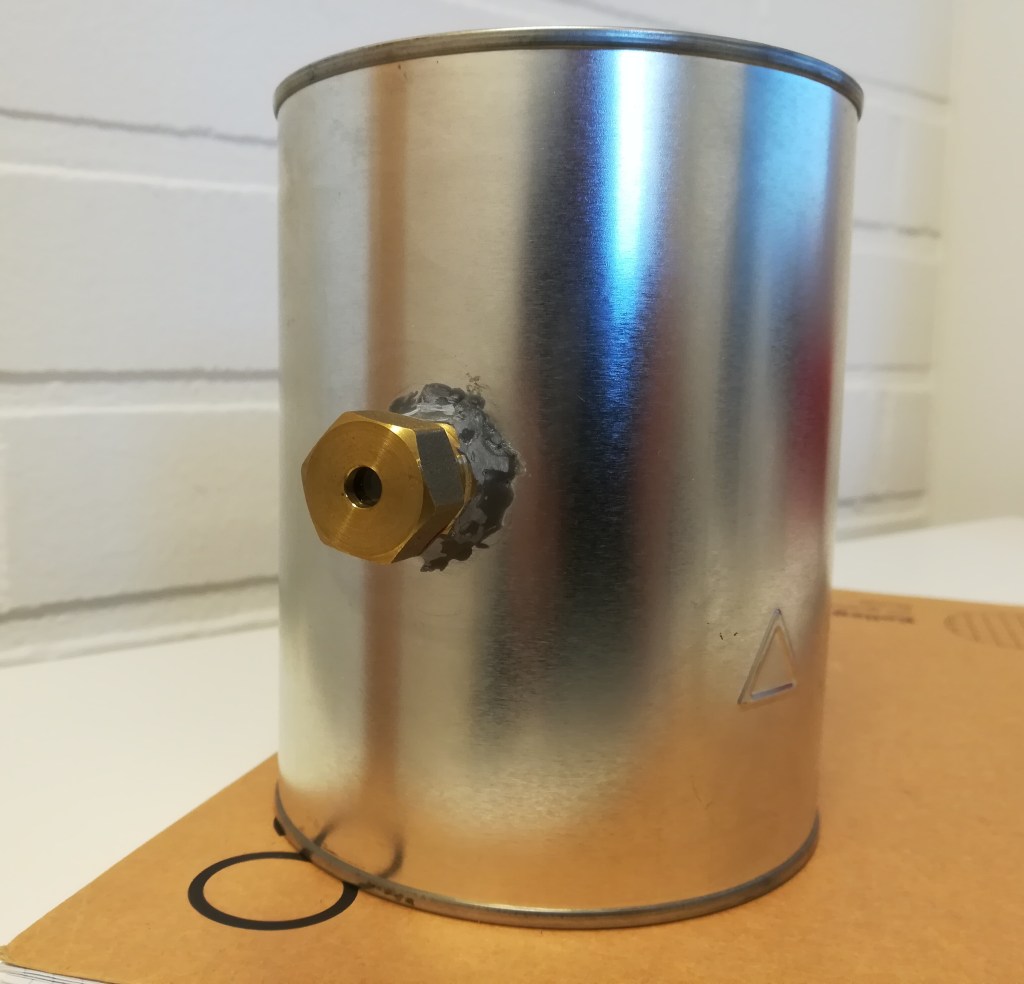
The container itself is a one liter paint can. Window ports are made of typical home pipe fittings, adapters and plugs. The window glass is uncoated 15 mm diameter circular glass from Edmund Optics (part # 43-891). I did some leak tests for the ports ports and they survived 3,5 bar pressure without leaking. I fixed the ports to the container wall with Plastic Padding.
Another problem was how to link my lens optics (see my older post) for this application? That would require some adjustable support for the sensor board. And even a tiny change in the container position during fill up or emptying would lead to re-alignment of the setup. That would also ad uncertainty if any reference measurement was still valid. I decided to use fiber input to avoid these problems.
Here is a simple adapter to connect fiber to input slit of the spectrometer.
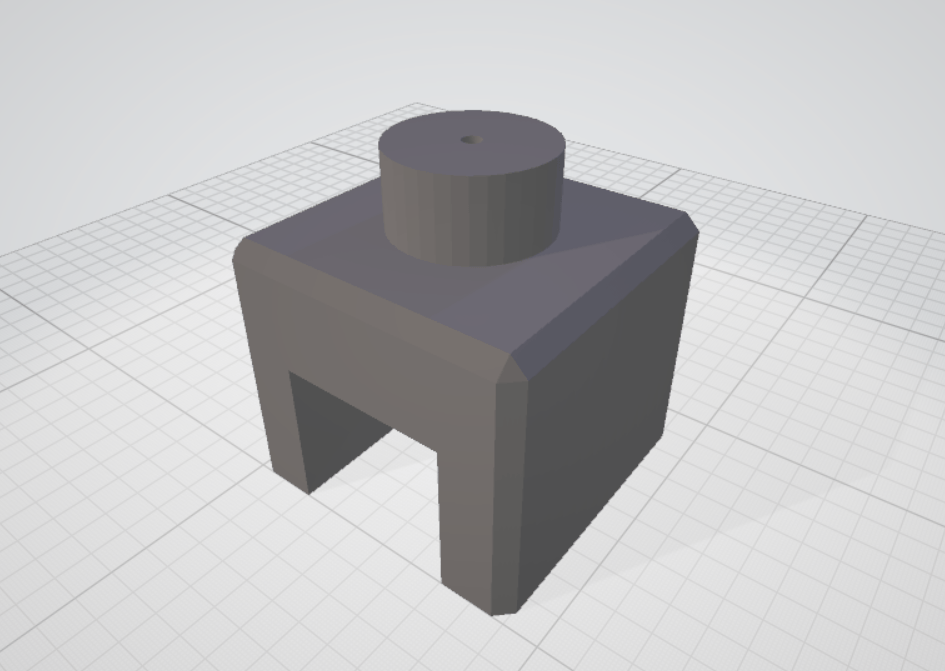
You can download the fiber_to_slit.stl file, if you wish to print one yourself.
The fiber is inexpensive type from Edmund Optics with 500 µm single plastic core (part # 57-097). Cutting of the fiber was a learning experience. Using scissors was worst choice. Two moving blades made a ridge on the middle of the fiber face. I ended up using a large paper cuter with a swing blade, and did final touches with very fine polishing stone.
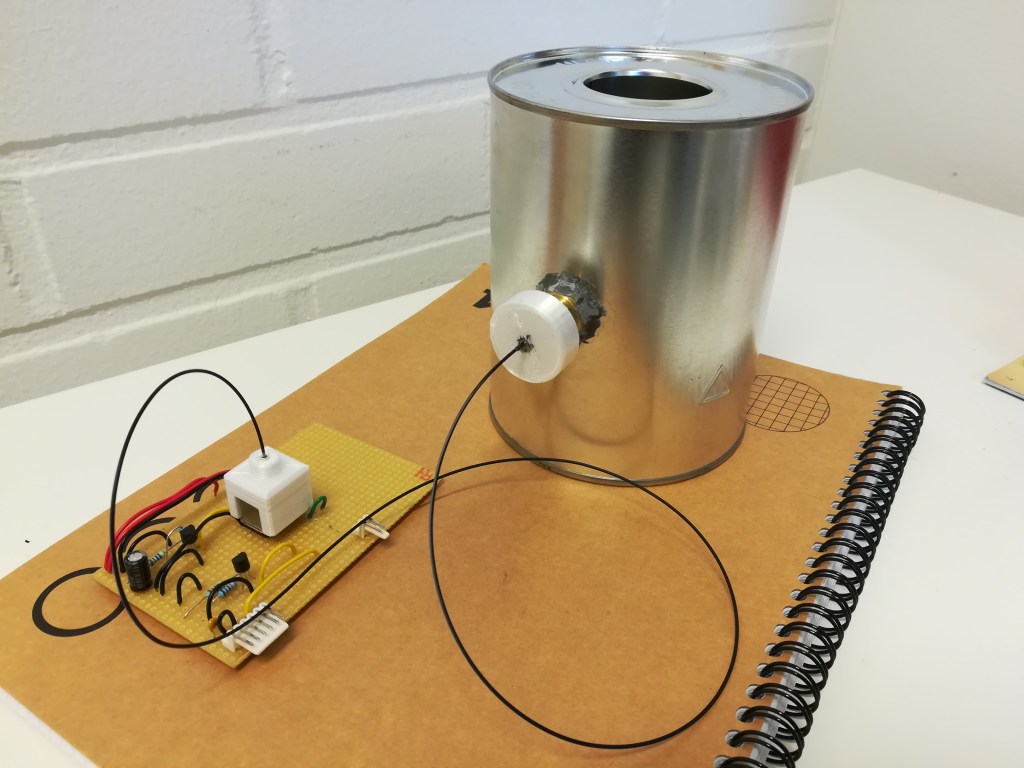
The experiment went better than expected. Although the light source was a cool white LED we were able to clearly detect the absorption profile of dilute CuSO4 solution (5 mmol/l).
Container TODO : a drain valve!

 Experimental Photonics